Aftermath News

Entries categorized as 'Movies'

The Order of the Alchemists: The Knights of Malta and Cagliostro

April 25, 2008 · No Comments

Coming Soon…

The Order of the Alchemists: The Knights of Malta and Cagliostro

Discover occult and sinister forces at play

…with Philip Gardiner

The Order of the Alchemists, the Knights of Malta and Cagliostro

cagliostro2
Count Cagliostro 1743-1795

Almost everybody is now aware of the infamous history of the Knights Templar. But not everybody realizes that there was another Order from the same time and with the same roots. This Order still exists today and has incredible power.

This film & audio book reveals the true history of the Sovereign Military Order of Malta and in so doing, we discover occult and sinister forces at play.

pinto
Manuel Pinto de Fonseca, the 68th Grandmaster of The Sovereign Military and HospitallerOrder of St. John of Jerusalem of Rhodes and of Malta. 1741 - 1773

From the days of heroic battles against Ottoman forces, to the alchemical world of the Grand Master himself, this film explores some very difficult questions:

Who are these Knights?
What was their role?
Who gave them authority?

The story of the Knights of Malta is filled with mystery, intrigue and excitement. Come with us on a journey into the heart of battle.

Featuring cutting-edge computer generated reconstructions and exclusive footage filmed in the Order’s Sacra Infirmeria, Church’s, Cathedral’s, Castle’s and grand buildings throughout Europe.

From Gardiner’s World

Related Articles

Knights of Malta

Cagliostro

Categories: Movies · Secret Societies · Vatican

Sundance documentary film shows the US spending its way toward disaster

January 27, 2008 · No Comments

AFP | Jan 23, 2008

PARK CITY, Utah (AFP) — With the US national debt topping nine trillion dollars, and climbing, filmmaker Patrick Creadon warns of a looming US fiscal crisis in his “I.O.U.S.A.”

The documentary film premiered at the Sundance Film Festival this week, exploring the implications of America’s ballooning federal debt on the republic and its citizens, if left unchecked.

SUNDANCE ‘08 - Meet the Filmmaker: Patrick Creadon

US Comptroller General David Walker “has crunched the numbers and they don’t add up,” Creadon said in an interview with AFP.

“We’re not going to have a heart attack in the next few years, but we’ve been diagnosed with a fiscal cancer and if we don’t treat it, we’re going to die,” he said.

“What lies ahead will be worse than any recession, and strains in the American economy will have ripple effects worldwide,” he added.

The filmmaker previously had fun with crossword puzzles in his 2006 hit “Wordplay.”

His latest documentary film is based on the New York Times best-selling book “Empire of Debt” by William Bonner and Addison Wiggin. Speeches by Walker regarding America’s “federal, savings, trade and leadership deficits” also provide a framework.

In the film, Creadon follows Walker as he travels across the nation urging people to reign in Washington’s wild spending or boost taxes, weaving in archival footage, economic data and candid interviews with investment guru Warren Buffett and former US Treasury Secretary Paul O’Neill.

The aim is to try to demystify complex economic principles and government fiscal policy-making ahead of the 2008 US election, with terms “economic slowdown” or “recession” on the lips of many analysts of late.

“This isn’t ‘an election issue.’ It’s all issues rolled up into one. It’s a global issue. The Iraq war, arts funding, Medicare, taxes, they’re all line items in the government’s budget,” said Creadon.

“One of the by-products of America being so wealthy for so long is that we’ve become fiscally illiterate.”

“There’s a sense of dread about financial matters now, and that’s made worse by the fact that people don’t like to talk about it because they don’t understand it. Hopefully, this (film) will help them understand it,” he said.

Of course, “this is America, and we don’t do anything until it’s a crisis,” he added.

Creadon also noted that US voters have traditionally rewarded politicians “who are not financially responsible” and punished politicians who up taxes or slash spending to try to balance the US federal budget.

“People don’t want to vote for the guy who tells them the party’s over. But the party is over,” he said.

“It’s a tough message to sell.” But, he added, “I’m very hopeful that people are going to hear this story and they’re going to change their ways.”

“At the end of the day, if you don’t pay for the services your government provides, your kids will. And that’s really selfish, and we’ve had a long run at being selfish.”

“We want our children to have a better life than we did, but that’s not going to happen for the first time in America’s history if we continue the way we’re going.”

The film notes that 46 percent of the US federal debt is held offshore in the form of treasury bonds, and warns this could weaken America’s sovereignty if Washington and its mostly Asian bankers ever butt heads over US foreign policy.

It cites as an example the events of 1956, when the United States threatened to dump the British pound and cause it to drop in value if Britain and France did not stop bombing Egypt in their fight for control of the Suez Canal.

Washington at the time was concerned Russia would enter the fray on the side of Egypt, and the war would escalate.

It is widely viewed by historians as the year of the demise of the British Empire, the film says. At the same time, it notes that Communist China currently holds the largest chunk of US federal debt.

Of course, in the short term, China needs America to buy its goods, as much as America need China’s loans.

On other fronts, the film laments America’s trade deficit — scrap metal is the second biggest US export to China, after electronic components, following decades of hollowing out of the US manufacturing sector.

And, the film says, individual Americans have spent more than they’ve earned over the past two years, falling deeper into debt — a trend that is unsustainable over the long term.

“If you’re addicted to debt, at macro or individual level, constantly living beyond your means, you’ll wake up in a world of hurt someday,” Creadon commented.

The film ends noting that the US federal debt stood at 9.2 trillion dollars on January 19, or about 30,000 dollars per American, and it went up by 86 million dollars in the 85 minutes it took the audience to watch the film.

Categories: Economic Meltdown · Movies

Oliver Stone to make “fair and balanced” movie about George W. Bush

January 21, 2008 · 2 Comments


Oliver Stone with Cuban dictator-for-life Fidel Castro. Stone told Daily Variety that he planned to make “a fair, true portrait” of Bush, focusing on such areas as his relationship with his father, President George H.W. Bush, his wild youth, and his conversion to Christianity.

Reuters | Jan 20, 2008

LOS ANGELES (Reuters) - Director Oliver Stone, who has made movies about Presidents John F. Kennedy and Richard Nixon, is developing a project about the current occupant of the White House, but promises it will not be a hatchet job, Daily Variety reported on Sunday.

Stone is in talks with Josh Brolin, who is starring in “No Country For Old Men,” to play the title role in “Bush,” the trade paper said.

He is shopping the script to financiers and hopes to start production by April, with a release date in time for the election in November, or the inauguration of Bush’s successor in January.

Stone told Daily Variety that he planned to make “a fair, true portrait” of Bush, focusing on such areas as his relationship with his father, President George H.W. Bush, his wild youth, and his conversion to Christianity.

“It will contain surprises for Bush supporters and his detractors,” said Stone.

He said Brolin was better looking than Bush, “but has the same drive and charisma that Americans identify with Bush, who has some of that old-time movie-star swagger.”

A White House spokesman could not immediately be reached for comment. Bush has acknowledged that he was a heavy drinker in his younger days, but has long been sober.

Stone, who has had his battles with drink and drugs, earned three Oscar nominations for his 1991 conspiracy film “JFK.” In 1996, he also received a script nomination for “Nixon,” which starred Anthony Hopkins. He won best directing Oscars for the Vietnam sagas “Platoon” and “Born on the Fourth of July.”

Other historical figures reinterpreted by Stone include dead rock star Jim Morrison in “The Doors,” and Alexander the Great in “Alexander.”

In 2002, he shot a flattering documentary about Cuban leader Fidel Castro for HBO, but the pay-cable network told him to balance it with more footage about political prisoners on the communist island.

Stone’s efforts last year to film a documentary about another Bush nemesis, Iranian president Mahmoud Ahmadinejad, also hit turbulence. His request for access was denied with an official reportedly dismissing the filmmaker as “part of the Great Satan.”

Categories: Crime & Corruption · Mind Control · Movies

1967 film foretells pre-natal brainchipping agenda

January 13, 2008 · No Comments

James Coburn stars in this bizarre 1967 farce “The President’s Analyst” about a shrink to the president who gets in too deep. In this clip, he is confronted with a totalitarian plan to inject brainchips into human beings and replace their names with numbers. Coburn’s character resists saying that it leads to depersonalization and that he will have nothing to do with such a manical plan. But they have their ways….

Whether this is another case of scifi “predictive programming” or a proper cautionary tale, I don’t know, but I suspect it is the former simply because only the elite manipulators knew of this agenda back in the 60’s.

The President’s Analyst: The Cerebrum Communicator

. . .

Related

The President’s Analyst

Doctor alleges plans underway to “Microchip” Newborns in U.S. and Europe

Rockefeller Admitted Elite Goal Of Microchipped Population

Revolution, flashmobs, and brain chips. A grim vision of the future

Pentagon to implant microchips in soldiers’ brains

Disturbing Poll: One in Ten OK with Net Access Brain Implant

Creepy Poll Findings: Net Access Brain Implant Is OK, Even For Kids

Categories: Big Brother Surveillance Society · Movies · Police State

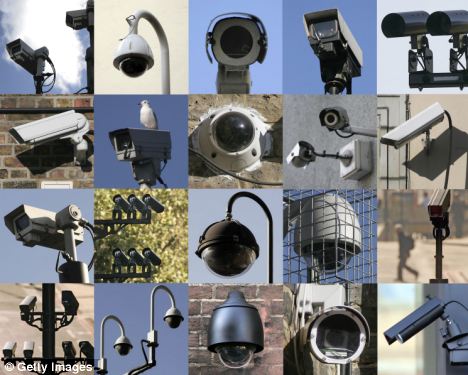
Surveillance footage gets a starring role

December 31, 2007 · No Comments


Associated Press | Dec 30, 2007

By Jake Coyle

NEW YORK — Adam Rifkin was walking down an aisle at Target when something hit him: at that moment, he was the star of his own movie — albeit a boring one.

“Every aisle I would walk down, there were multiple cameras on me,” the 41-year-old director said in a recent interview. “The filmmaker in me started to piece together the various shots. I thought to myself, ‘If I could obtain this footage and cut this together, this could be a scene.”‘

Rifkin’s curiosity has led to “Look.” It’s a film shot entirely from the perspective of surveillance cameras. For the low-budget movie — intentionally cast without stars — Rifkin placed his cameras wherever surveillance cameras already were or would likely be: above ATMs, around high school grounds, in department store changing rooms (yes, it’s legal in some states).

The film follows several characters across a handful of days as they move in and out of the purview of surveillance cameras. The obvious question is: How do our lives change if we’re being constantly watched?

“Look” suggests the cameras that increasingly blanket society are both a blessing and a curse. Rifkin’s cameras catch people cheating on their spouses, criminals murdering a police officer and attractive women farting in elevators. Sometimes the video evidence brings about justice; other times, it tells only a fractured version of the truth.

“To me, it’s such a complex issue,” says Rifkin. “I believe that in many instances these cameras provide a valuable service. They help deter crime or they help solve crime. I also think conversely that in many, many instances, they’re a complete invasion of privacy.”

It’s an issue that lawmakers, police departments and civil liberty advocates are increasingly wrestling with. Better technology and the pressing threat of terrorism have made video surveillance a popular tool, particularly in cities.

London has been at the forefront of video surveillance and is widely considered the most camera-covered city in the world, with an estimated 4 million cameras doting its streets. Their closed-circuit television found a world stage in 2005 when it helped identify the bombers of the July 2005 terrorist attacks.

It was a lesson taken to heart by the Department of Homeland Security and American police departments. The area below 14th Street in Manhattan — an area considered one of the most likely terrorists targets — reportedly has more than 4,200 cameras.

Other cities have also increased surveillance, including Chicago, Washington and Philadelphia.

And that still doesn’t account for the large amount of business and personal cameras stationed (often secretly) in offices or outside homes. Also to be factored in: cell phone cameras and nanny-cams.

Just in recent months, the news has been littered with stories where surveillance cameras played a key role. In October, very clear photos were captured in a Cleveland high school of a student gunman who wounded two teachers and two students before killing himself. Hotel video surveillance has even had an impact in the O.J. Simpson case of alleged kidnapping and armed robbery of sports memorabilia dealers in Las Vegas.

The American Civil Liberties Union, believing the country is headed toward a “genuine surveillance society,” has recently posted a symbolic clock reading “23:54″ on its Web site — six minutes before the midnight of total watchfulness.

“Policies to protect individual privacy are desperately, desperately needed,” said Donna Lieberman, executive director of the New York Civil Liberties Union. “Video surveillance can be overused and its potential benefits inflated.”

Debates about privacy recently have centered on the National Security Agency’s warrant-less monitoring of phone calls, and on companies like Yahoo Inc. that have handed over personal information to foreign governments.

While such instances have produced cries of “Big Brother,” the issue of video surveillance has often passed without debate. Polls have shown the majority of Americans support the use of video surveillance.

But civil liberty and advocacy groups like the Electronic Privacy Information Center, the Center for Democracy & Technology and the Cato Institute say video surveillance is an urgent matter. Privacy advocates argue there’s little regulation or oversight in the recording and archiving of video shot by the government or by companies.

Lieberman cited that during the Republican National Convention in 2004, an NYPD surveillance helicopter shot nearly four minutes of footage of a “romantic tryst” on a building roof — video that later ended up online. (In February, a federal judge ruled that the NYPD must cease routine videotaping of people at public gatherings unless there’s reason to suspect unlawful activity.)

“Even in public, I think people have legitimate privacy claims when they move about,” said Jim Harper, director of information policy studies at Cato.

“The thing to do is to strike some balances,” said Harper. “Soon enough, they’ll have the ability with optical character recognition and facial recognition to really provide extensive tracking of people in cars and things like that.”

It’s unlikely territory for Rifkin, who previously wrote and directed 1994’s Charlie Sheen car chase flick, “The Chase,” and co-wrote this year’s “Underdog” for Disney.

“I would say to anybody, go out on any given day and just start looking around for the cameras,” said Rifkin. “And you will be shocked at how many of them there are and how often you’re being watched.”

Categories: Big Brother Surveillance Society · Movies · Social Engineering

1967 Drama Demonstrates the Psychology of Fascism in Action

December 31, 2007 · No Comments

Since this movie The Wave was based on a real experiment at a high school in 1967, you can just ignore those who glibly claim that “it can’t happen here”. Unfortunately, it can happen here and it IS happening here. The proof is in the fact that I can’t even talk like this in public without the people around me getting very disturbed and hostile. And if I were to walk up to a group of shoppers at the mall suggesting that we live in a fascist dictatorship, that our rights are being stripped, that private property is under threat, that 9/11 was an inside job, that the war is a total fraud, that global warming is a hoax designed to “unite the world” and that our leaders on both sides are murdering terrorist gangsters who have defrauded Americans of trillions and are pushing us by stealth into a North-American Union and on to global government, someone is bound to come try to shut me up while others will be afraid to say anything lest they be attacked themselves.

Therefore, we live in a Stasi-like self-policing climate of fear and paranoia where anyone who dares to criticize the government is seen as a dangerous “conspiracy theorist” or even as a terrorist to be reported to the fascist authorities at Homeland Security. And those who question climate change are labeled as “global warming deniers”, dangerous people who believe that the sun is warming the solar system. We are the ones who will refuse to get sterilized or maintain one-child families. We are the ones who will refuse to take the chip implant and the neurotoxic injections. We are the sane ones, the ones with any sense left in our heads, yet are believed to be crazy fanatics who are a threat to world order. That is how brainwashed and warped people have become.

So group-think has taken hold in America. We are no longer a land of individualists. We have been transformed into a bunch of robotic goons ready to do whatever the government tells us “for our safety”. And this is exactly what happened in Nazi Germany, and in fact it is happening all over the world, by design. And the liberals, socialists and “progressives” out there who know Bush and the neocons are bad, think themselves to be the very antithesis of fascism, yet they are just as vulnerable to it as anyone else. The Right is controlled through the War on Terror paradigm, but the Left is controlled through the Global Warming paradigm, two false paradigms with the same ulterior motive, to use chaos and fear to unite the world under a global fascist dictatorship.

So as you watch this movie, keep in mind that anyone, of any political persuasion, can be whipped up into a fascist mindset, even though he sees it as something wonderful and fantastic. Hitler put it best:

“Through clever and constant application of propaganda, people can be made to see paradise as hell, and also the other way around, to consider the most wretched sort of life as paradise.”

PW

. . .

The Wave - 46 min

1981 - Based on the real experience of a high school class in Palo Alto, CA in April 1967, whose teacher wanted to explain the rise of the Nazi party to his students.

Categories: Child Takeover · Fascism · Movies · Social Engineering

Freemasonry, Eager to Step From Cultural Shadows

December 25, 2007 · 3 Comments

Alexandria’s Masonic Temple has a role in “National Treasure: Book of Secrets.” (By Bill O’leary — The Washington Post)

Washington Post | Dec 24, 2007

By Daniela Deane and Kirstin Downey

When Hollywood comes knocking, that’s probably a clue the time has come to open the door. And the secretive, centuries-old order of Freemasonry seems to be picking up its cue.

“National Treasure: Book of Secrets,” which opened in theaters this weekend, is the second film in the adventure-fantasy series to shine a light on the mysterious and little-known world of the Masonic order.

And although the Masons play a much smaller part in the sequel than they did in the 2004 original, the first scene featuring the movie’s three male leads — Nicolas Cage, Jon Voight and Ed Harris — was filmed in Alexandria’s George Washington Masonic Memorial, one of the Masons’ most visible shrines.

Filmmakers and novelists have been mining the Masons recently, weaving their legends and symbols into such tales of conspiracies and secrets as the “National Treasure” films and Dan Brown’s “The Da Vinci Code.” And filmmakers’ interest comes as the fraternal, often-controversial Freemasons pull back the curtain on themselves in an effort to update their antiquated image and replenish their dwindling ranks.

Director Jon Turteltaub says, “The ‘National Treasure’ movies are all about things we think are forgotten but are actually pieces of history that are still percolating around us and have a role in our current lives — a lot like the Masons.”

Footage was shot at some of the grandest buildings in the Washington area — the Library of Congress, the Lincoln Memorial and Mount Vernon — for the sequel. (The Oval Office was a constructed set.) But filming also took place in the Masonic Memorial, known locally as the Masonic Temple, the Masons’ majestic hilltop shrine to their most prominent member, George Washington. The top of the temple reaches to 400 feet above sea level, one of the highest points in the Washington area.

Although the Masonic Temple is Alexandria’s most visible landmark — and one of Washington’s most intriguing and grandiose shrines — few Washingtonians know what goes on inside the ornate building or what the organization behind it is all about. For centuries, the all-male group’s eerie symbols and the exotic costumes have provoked speculation about the possibly strange doings inside their temples.

In the film, the Masonic Temple’s grand auditorium acts as a stand-in for a lecture hall. Other than providing what the director called a “gorgeous, extraordinary” set, the Masons figure little in the sequel — but their small part is significant. In a surprising twist, it turns out that the character Sadusky (Harvey Keitel), a Mason, is a better man than he seemed in the first film.

“When people don’t know an organization, they fear it,” says George Seghers, executive director of the Masonic Memorial. “If people don’t know what you’re doing, they think the worst.”

But Seghers — and other prominent Masons — are determined to change that. And being in a Hollywood movie is just a small part of that effort.

“We’re really trying to bring the memorial back into the community, not just be a fortress on the hill,” Seghers says. “We’re nothing to be afraid of.”

Masons say their organization is dedicated to “making good men better.” It donates about $2.5 million a day to medical research, health care, education and other causes, according to Richard Fletcher, a spokesman for the group. Masons are a staple of community parades, where they dress as clowns and ride in little cars to raise money for Shriners’ hospitals.

Fletcher says the Masons numbered 1.5 million in 2006, down from a peak of 4 million in 1959. He says the membership shrank rapidly as the World War II generation, which he described as a generation of joiners, has continued to age and die.

But now there’s a feeling in the group — not yet backed up by statistics — that the tide has turned and that a new generation is “looking for something beyond themselves, an anchor to stabilize their lives,” Fletcher says. He says younger men nowadays are part of a “generation of volunteers,” which he predicts will stabilize the downturn.

Others aren’t as optimistic.

“The lodges are in deep decline,” says UCLA historian Margaret Jacob, author of “The Origins of Freemasonry: Facts & Fictions” and an expert in Masonic history. “It’s no longer a vital societal organization, so it has become the subject of myth and legend.”

One prominent local Mason today is Stephen Trachtenberg, former president of George Washington University. He says he initially joined out of deference to the group’s generosity in funding dozens of student scholarships. Trachtenberg says his membership makes him feel he’s experiencing something out of another era.

“I’m 70, and I lower the average age when I enter the room,” Trachtenberg says. He notes that it was like “being in a wonderful time machine, working with people who are transparently forthright. It’s a 19th-century endeavor looking to redefine itself in the 21st century.”

Like so many things about the Masons, even the organization’s origins are shrouded in mystery. Hundreds of books have been written about them, but little is certain, partly because the organization has been so secretive and partly because conspiracy theorists have spread a variety of tales about the Masons and their ceremonies.

In the 1700s and 1800s, members tended to be intellectual free thinkers, associated with Protestantism and scientific inquiry. Freemasonry spread from England throughout Europe, and Masons were frequently involved with revolutionary movements. American Freemasons included Washington, Benjamin Franklin, John Hancock, James Madison, James Monroe, Paul Revere and John Paul Jones.

Members came to be viewed as dangerous rabble-rousers, particularly by those in positions of power. In 1738, Pope Clement XII declared that any group that operated in such secrecy was suspect, and that any Catholic who joined the group would be excommunicated. Adolf Hitler thought the Masons were engaged in a conspiracy with the Jews to dominate world affairs, and he persecuted European Masons and seized their libraries and archives.

Masons today say the group is not anti-Catholic and that it welcomes any man who believes in God and demonstrates good character. Their ceremonies contain religious references but are nondenominational and apolitical, they say.

The group is believed to have been started by medieval stonemasons working with softer material called freestone, hence the name. Since the group’s beginnings, its members have shared an intense interest in construction, and their ceremonies are still filled with architecture-related terminology and stories associated with the wonders of the ancient world. The group owns some of the most grandiose real estate in the country.

And the Masonic Temple in Alexandria isn’t the Masons’ only jaw-dropping Washington real estate. There’s also the formidable Temple of the Scottish Rite on 16th Street NW, a massive neoclassical building — flanked by two 17-ton sphinxes that can be puzzling to locals — along with 36 other lodges.

Local Masons spearheaded the effort to build the Masonic Temple in Alexandria to honor Washington and to house relics associated with his membership. It was completed in 1932, during the depths of the Great Depression.

The temple’s construction was an event of enormous regional importance. President Calvin Coolidge laid the cornerstone, and President Herbert Hoover attended the dedication.

But the group now must overcome a long legacy of suspicion. Seghers says one of the main things he wants to do is update the exhibits at the Masonic Temple to tell a coherent story about his philanthropic organization.

Touring the Masonic Temple’s Cryptic Council and Grotto Rooms recently, Seghers pointed out Egyptian murals depicting scenes from the Old Testament, lotus and papyrus columns, alcoves filled with coins and artifacts, and rows of pictures of aging Masons wearing fezzes adorned with Arabic words written in glitter.

“These rooms confuse people. They can even scare people, ” Seghers says. “One woman asked us if she could leave. They don’t understand it. They say, ‘This is all very nice, but what is it?’ We need to change that.”

. . .

Related

The Shriners - Krafty Klowns

Wisconsin’s top cop is also top Mason

Secret Society is Eyeing College Students to Fill the Ranks

Shriners’ charity cash went astray

Shriners Accused of Widespread Financial Misdeeds

33° Scottish Rite Head spills the beans about the Masonic power structure

US author to unveil Washington’s Masonic past

Court rules Freemasonry a Religion

The Hermetic Code: Unlocking One of Manitoba’s Greatest Secrets

Italians still seek truth about Masonic terror bombing 27 years ago

Masons under anti-terror surveillance after UDA infiltrates Scottish lodges

Diebold & The Mormon Mason Handshake

The many secrets of ‘God’s Banker’

Inside a secret society: A gay African American Freemason’s story

Masons honor one of their own: Gerald R. Ford

Brother Gerald Ford, 33rd degree Mason of the Shrine

Michael Richards: Freemason, Shriner, Racist

Masons struggling to keep rituals secret

Freemasonry alive and well in 21st century

Categories: Illuminati · Movies · Occult Agenda · Secret Societies

New movie ‘Look’ eyes voyeuristic surveillance society

December 21, 2007 · No Comments

Scenes in Look are shot to appear as if they were ripped from a store surveillance camera.

Wired | Dec 22, 2007

Sneaky Sex, Spooky Scenes: Look Flick Eyes Voyeuristic Surveillance

By Hugh Hart

Adam Rifkin is best known in Hollywood circles for writing family-friendly comedies like Mousehunt and this year’s Underdog. But when his new movie Look opens Friday in New York and Los Angeles, the writer-director gets a chance to channel his inner Peeping Tom.

Prefaced by a factoid asserting that 30 million surveillance cameras in the United States capture images of the average American 200 times a day, Look dramatizes a week in the life of department-store sex addicts, a high school seductress, a pedophile, a “straight” family man who’s having an affair with a gay lawyer, convenience-store slackers and thieves who’ve stashed a body in the trunk of their car. The gimmick: Everything is filmed from the perspective of security cameras.

Wired News caught up with Rifkin in Los Angeles to learn more about his crafty experiment in surveillance cinema.

Wired News: What inspired you to make a movie about the culture of surveillance?

Adam Rifkin: I got a traffic ticket in the mail from the police department. I didn’t know it even happened, but they sent me this picture of myself going through a red light, and you could see my face clear as day, singing to the radio, making a horrible expression. The idea that a photograph could be taken of me without my knowledge and then sent to my home address freaked me out a little bit. I started to think, “What other cameras are out there, taking shots of me that I’m not aware of?” For me, that’s when the whole thing started

LOOK OFFICIAL MOVIE TRAILER

Video: Although Look appears to be shot entirely on security cams, capturing the behavior of clueless citizens, Adam Rifkin’s new movie features professional actors performing fully scripted scenes.

WN: How did you research Look?

Rifkin: I went to a bunch of security offices in malls and department stores and banks and interviewed the people who watch the surveillance monitors. I just assumed they’d be trained, professional, responsible individuals, right? Not always the case. In some instances, the guys behind the cameras are high school kids in baggy pants who use cameras with joysticks to zoom in on girls’ boobs. They weren’t looking for shoplifters. If a hot girl walked into the mall, they tracked her from camera to camera to camera, all day long. Let’s say the camera caught under her skirt as the wind blew, they’d take that footage and post it on YouTube. They showed me their highlight reel!

WN: It must have been tricky getting permission to film all this weird behavior in shopping malls, high schools, convenience stores, parking lots and hotel lobbies.

Rifkin: We didn’t break any laws, but we weren’t entirely forthcoming. In some instances we said we were making a reality show. We told other people we were making a documentary about surveillance cameras or shooting a segment on surveillance cameras for the news. We learned pretty quick if we told people we were making a movie and planned to do all these things at their location they’d say, “No way are we going to allow this.” So we had to get creative.

WN: With the different time codes and grainy video quality that varies from scene to scene, the footage in your movie really looks like it was captured by actual security cameras. Did you in fact use the cameras installed at each location?

Rifkin: No, but every location you see in the movie did have real surveillance cameras. We then placed our cameras exactly where the actual security cams were and shot the scenes in HD using Sony F-900s and F-950s — the same cameras they used on movies like Sin City. When we finished shooting, the movie looked beautiful. Then we spent an enormous amount of time and enormous amount of money making it look like shit.

WN: You were trying to make it look artfully crappy.

Rifkin: Exactly.

Categories: Big Brother Surveillance Society · Movies · Police State · Social Degeneration · Social Engineering

Every move you make is being watched and privacy is fast becoming obsolete

December 21, 2007 · No Comments


You will never be left alone

Sydney Morning Herald | Dec 21, 2007

Almost every move you make is being watched - and privacy is fast becoming obsolete, writes Gerard Wright.

If Hollywood and its movies are America thinking aloud, then a very interesting thought bubble has just appeared over the map of the United States.

The bubble appears, naturally, in the form of a film, Look, which opened in US cinemas this month. It weaves a range of stories with entwining themes of sex, blackmail, crime and alienation, with a twist: every scene of the film is shot from the perspective of a surveillance camera, from the bubble lens above an ATM, to the elevated perspective of the security cameras that are ubiquitous and sometimes invisible, across the US.

As entertainment, the jury will return a verdict by the end of the year. As a statement of the American and world zeitgeist, Look is impeccable in its timing.

The US, like Australia and Britain, has taken fear as a guiding principle, and used it to introduce or justify wide-ranging security and surveillance programs as a means of preventing terrorist attacks such as those in New York and Washington on September 11, 2001, in Bali in October 2002, and London in July 2005.

In the US the focus has been on preventing another attack, and protecting the “homeland”. It was the justification for the invasion of Iraq, and for the process known as “data-mining” where tens of millions of phone call records are scoured, and billions of calls and emails are monitored.

On a localised level, there is what Yvonne Cager, a video surveillance marketing manager at Texas Instruments, called the “drive to have more eyes everywhere”. An IBM report last year estimated there were 26 million surveillance cameras in the US, while the iSuppli research company forecasts that international sales of surveillance systems will more than double to 66 million units by 2011.

One of these cameras caught Look’s director, Adam Rifkin, singing along to a song in his car as he passed through an intersection, triggering a red light camera. The image Rifkin saw with the fine that arrived in the mail a week or so later was astonishingly sharp and unflattering.

“I felt violated,” he says, but also inspired. Rifkin began looking for surveillance cameras, and the laws that govern their use. The cameras were everywhere and saw everyone. By Rifkin’s assessment, the average American could expect to be filmed 200 times a day. The laws governing that coverage were surprisingly lax.

“In 37 states it’s legal for hidden cameras to be in dressing rooms and bathrooms,” Rifkin says. “I wanted to throw a bucket of cold water onto the public’s obliviousness about these cameras.”

Full Story

Categories: Big Brother Surveillance Society · Movies · Police State · Social Engineering

Actors ’shot dead while filming crime movie’

December 18, 2007 · 2 Comments

Police responsible for the shooting looked like they belonged to an elite unit.

Telegraph | Dec 18, 2007

By Gary Cleland

Armed police in Angola shot dead two actors filming a crime movie after mistaking them for real armed robbers, the director of the film claimed.

Three other actors were injured in front of astonished onlookers during filming in a crime-ridden suburb of Angola’s capital, Luanda.

Director Radical Ribeiro, from the Banda Mulundi production company, said: “We saw the police pick-up speeding towards us.

“It looked empty but then suddenly it stopped and people appeared on the back and without asking any questions they started shooting at everybody at close range.

“I don’t know how I escaped, I was just two metres away.”

The shooting happened on Monday.

The director said that the actors were carrying firearms, but without any ammunition.

He said: “I was stunned when I saw them falling down. They went on shooting until I shouted out, ‘Please don’t shoot, this is a movie’.”

The officers then stopped firing and left without attending to the injured, who were taken to hospital, Mr Ribeiro said.

Angolan officials have not commented on the incident, but Mr Ribeiro said he had told local police about the film and maintained that he did have permission to film in the area.

He added that the police responsible for the shooting looked like they belonged to an elite unit.

Categories: Bizarre · Crime & Corruption · Movies · Police State